

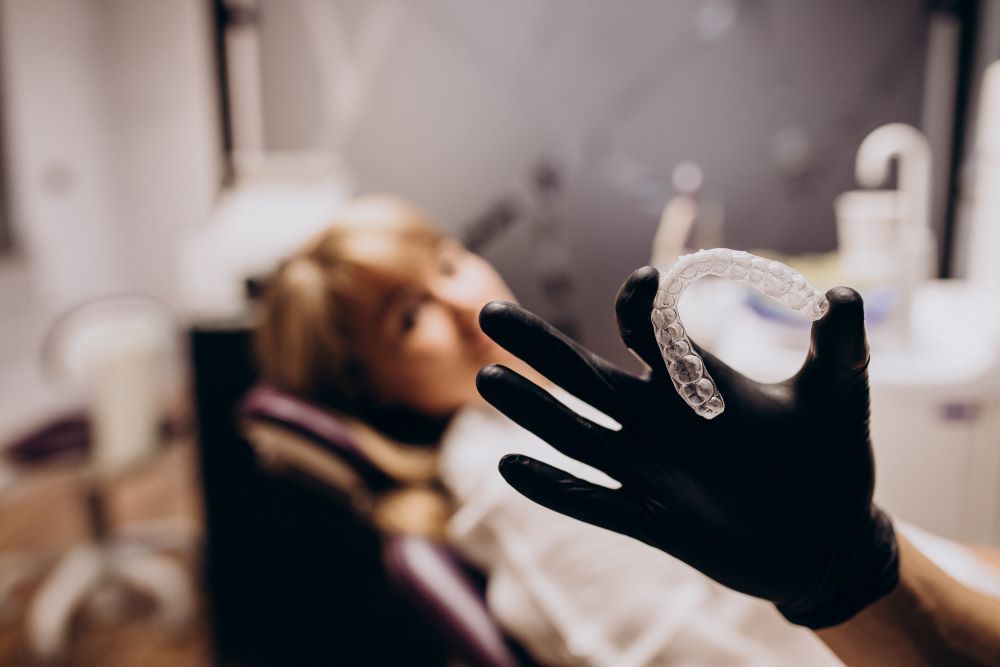
Can Invisalign fix an underbite? When the problem comes mostly from tooth position, clear aligners may be an option. When the jaw itself is the cause, other treatment may be needed. For patients in Toronto, an assessment on Dupont Street shows which type of bite problem you have and whether aligners suit it.
What Clear Aligners Can and Cannot Do for Your Bite
- An underbite means the lower teeth or jaw sit in front of the upper teeth, and it can come from tooth position, jaw structure or both.
- Clear aligners may be an option when tooth position is the main cause, while major jaw differences may need other treatment, including jaw surgery.
- At Enamelle Dental, Invisalign is used for bite alignment issues as well as crowding, gaps and orthodontic relapse.
- Every bite is assessed with a consultation and digital assessment, and an orthodontist is involved when required.
- Treatment time varies with case complexity, and refinements are included if treatment goals evolve.
Bite problems are one of the most searched topics about clear aligners, and for good reason. A bite that does not line up can affect how you chew, how your teeth wear and how your jaw feels. This guide explains the main bite types, which ones aligners can often treat and what happens at an assessment here in Toronto.
Can Invisalign Fix an Underbite?
Sometimes, yes. The answer depends on what is causing the underbite. The CDA's guide to orthodontics explains that the position of both your teeth and your jaws affects your bite. An underbite can therefore come mainly from how the teeth are positioned, from the jaws themselves, or from both. When tooth position is the main cause, clear aligners may be an option.
When the jaw is the main cause, aligners alone may not be enough. The CDA notes that jaw surgery may be needed when there are major differences in the size or position of the upper and lower jaws. That is why the first question is never "can aligners do it?" but "what kind of underbite is this?"
What Is an Underbite?
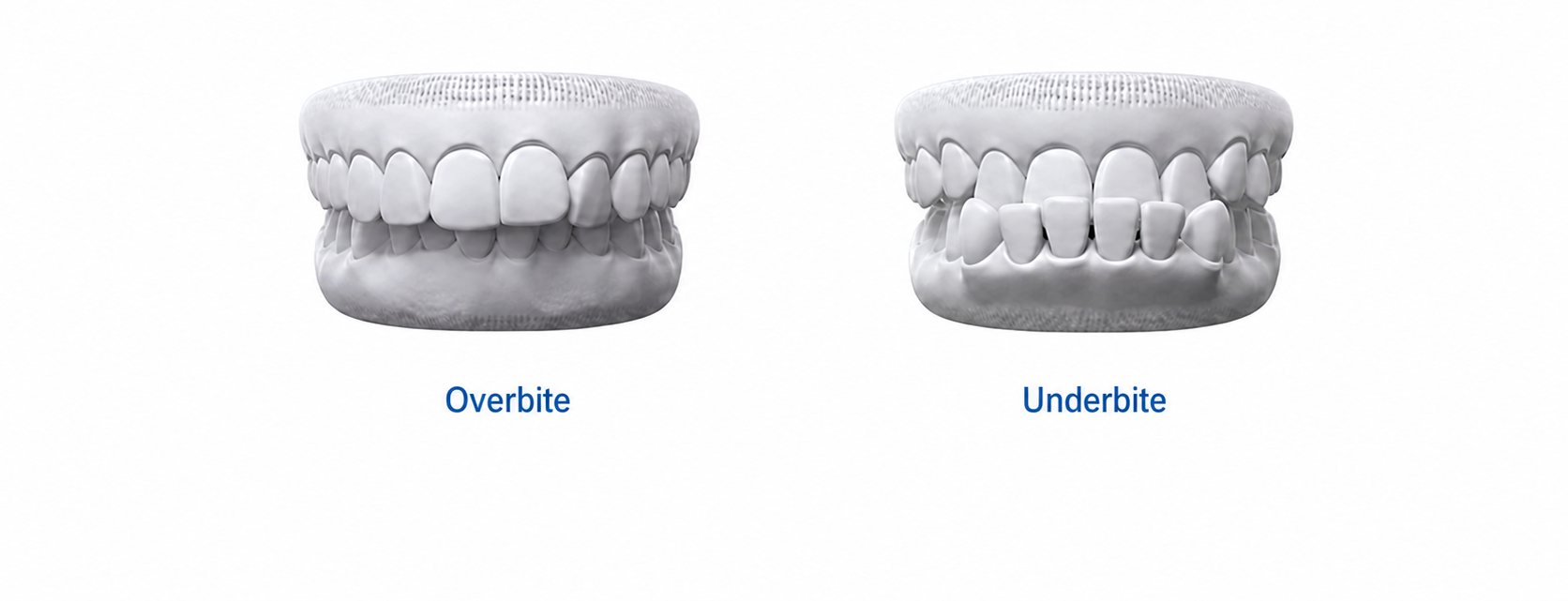
The Canadian Dental Association describes an underbite as a bite in which the upper teeth fit inside the arch of the lower teeth. In everyday terms, the lower front teeth sit in front of the upper front teeth when you close your mouth.
Signs of an Underbite
People often notice an underbite in one of these ways:
- the lower front teeth sit ahead of the upper front teeth
- biting into food with the front teeth feels awkward
- the front teeth show uneven wear
These signs do not confirm the cause. Only a clinical and digital assessment can tell whether the problem is dental, skeletal or both.
How Invisalign Underbite Treatment Is Planned
Invisalign underbite treatment starts with understanding the bite. At Enamelle Dental, the process looks like this:
- Consultation and digital assessment: your teeth and bite are examined, and you learn who will oversee your case.
- Custom aligners in stages: if aligners suit your bite, you receive custom Invisalign aligners in a series of stages.
- Regular in-person visits: progress is monitored at follow-up visits.
- Refinements and retention: refinements are added if your goals change, and the final stage covers how to keep the result.
For complex bites, an orthodontist is involved when required.
Treatment time varies with case complexity, and how consistently you wear your aligners also affects how long it takes.
When Can Invisalign Fix an Underbite, and When Is More Needed?
The deciding factor is the cause. Here is a simple way to think about it:
- Mostly dental underbite: the teeth are tipped or positioned so the lower front teeth sit ahead of the upper ones. Clear aligners may suit these milder cases.
- Skeletal underbite: the lower jaw itself sits forward. Aligners alone may not be enough, and a more involved plan is usually needed.
- A mix of both: part of the problem may be treatable with aligners, with other care added where the jaw is involved.
So when patients ask whether Invisalign can fix an underbite, the honest answer is that it depends on which of these groups their bite falls into. The assessment tells you before treatment begins.
Can Invisalign Fix an Overbite?
Many people search for help with an overbite, and the word usually covers two different problems. The CDA describes a deep bite, where the upper front teeth cover the lower front teeth too much, and an overjet, where the upper front teeth protrude.
So, can Invisalign fix an overbite? As with underbites, it depends on the cause and severity. Some cases that come mainly from tooth position may be suitable for aligners, while others need a different or combined approach. Invisalign overbite treatment is only planned after the bite has been assessed, so you know in advance whether aligners are likely to help.
Crossbite, Open Bite and Other Bite Problems
Underbites and overbites are not the only bite issues. The CDA also describes:
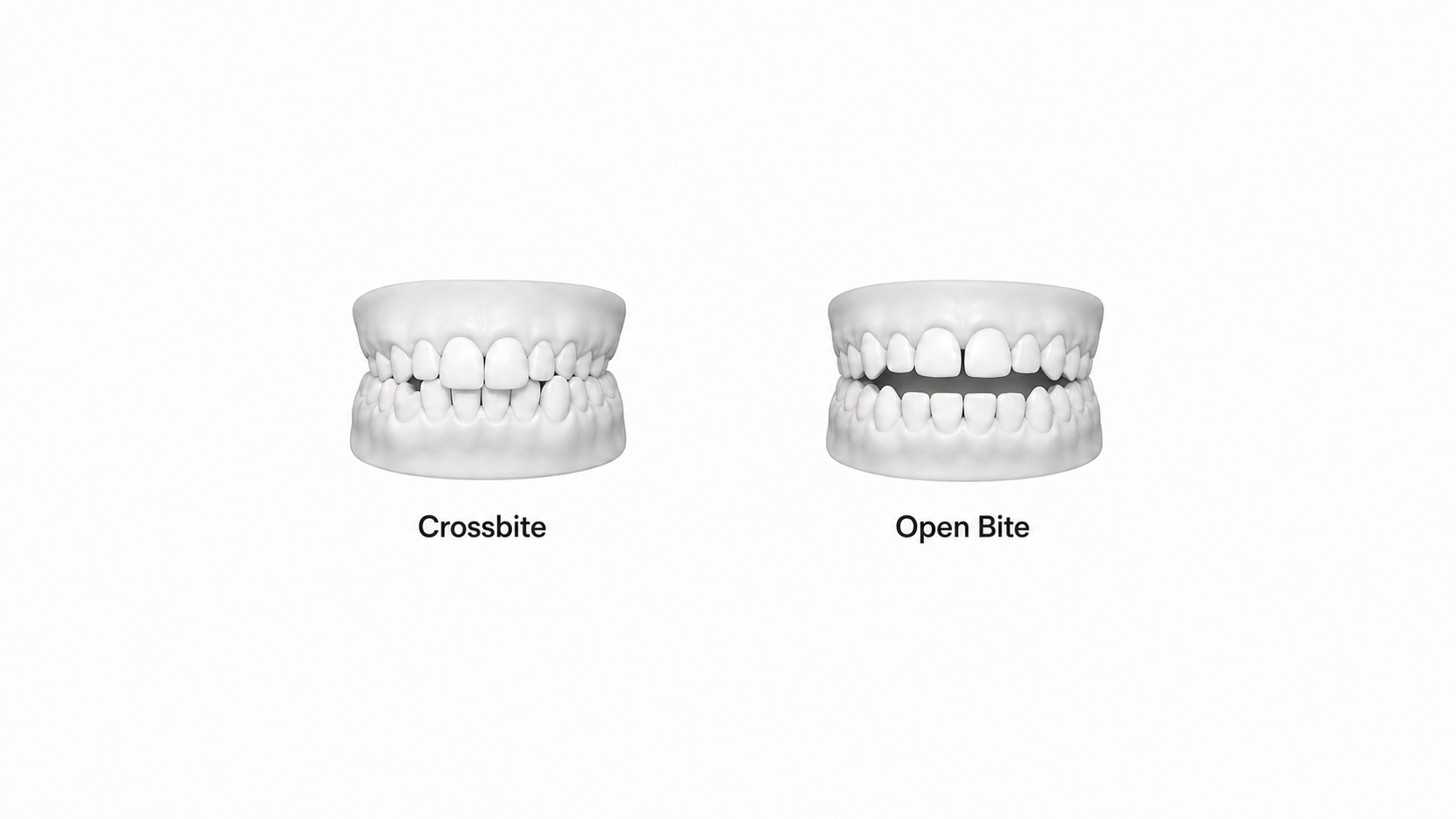
- Crossbite: one or more upper teeth do not line up with the matching lower teeth.
- Open bite: the back teeth touch, but there is a gap between the upper and lower front teeth.
The CDA also lists missing, crooked, crowded or protruding teeth among the causes of a poor bite, and says thumb or finger sucking can affect it too. Each of these problems is assessed in the same way, because the right treatment depends on whether teeth, jaw or both are involved.
Why Bite Problems Are Worth Treating
A bite problem is not only about appearance. The CDA notes that a misaligned bite can strain chewing, cause uneven tooth wear and lead to muscle tension and pain, and that straight teeth are simpler to clean and less likely to decay or be injured.
If jaw discomfort is part of the picture, it is worth mentioning at your visit. Jaw pain and TMJ-related symptoms are assessed separately, and you can read more on our night guards in Toronto page. For bites that need several restorations as well as alignment, bite correction can also be part of full mouth rehabilitation in Toronto.
Bite Types at a Glance
This table summarizes the bite types described by the CDA and how aligners usually fit in:
| Bite type | What it means | Can aligners help? |
|---|---|---|
| Underbite | Upper teeth fit inside the arch of the lower teeth | May be an option when tooth position is the main cause |
| Deep bite | Upper front teeth cover the lower front teeth too much | Depends on cause and severity |
| Overjet | Upper front teeth protrude | Depends on cause and severity |
| Crossbite | Upper teeth do not line up with the matching lower teeth | Assessed case by case |
| Open bite | Gap between the front teeth when back teeth touch | Assessed case by case |
Who Assesses Your Bite
Your aligner treatment here is planned and provided by Dr. Yasmin Vakilian, who holds Invisalign certification and has advanced Invisalign experience. The doctor follows your progress at in-person visits and brings in an orthodontist when required, which matters most for complex bites. The Invisalign in Toronto page covers the service itself, and our main guide to Invisalign for adults explains the full process.
Frequently Asked Questions About Invisalign and Bite Problems
Not Sure What Kind of Bite You Have?
If you have been wondering whether clear aligners can fix your bite, an assessment answers that question before any treatment begins.
- Every case starts with a consultation and digital assessment of your teeth and bite.
- An orthodontist is involved when required, which matters for complex bite problems.
- Refinements can be added if your goals change, with a plan to keep the result at the end.
Book your Invisalign consultation at Enamelle Dental, 848 Dupont Street, Toronto, ON M6G 0B9


