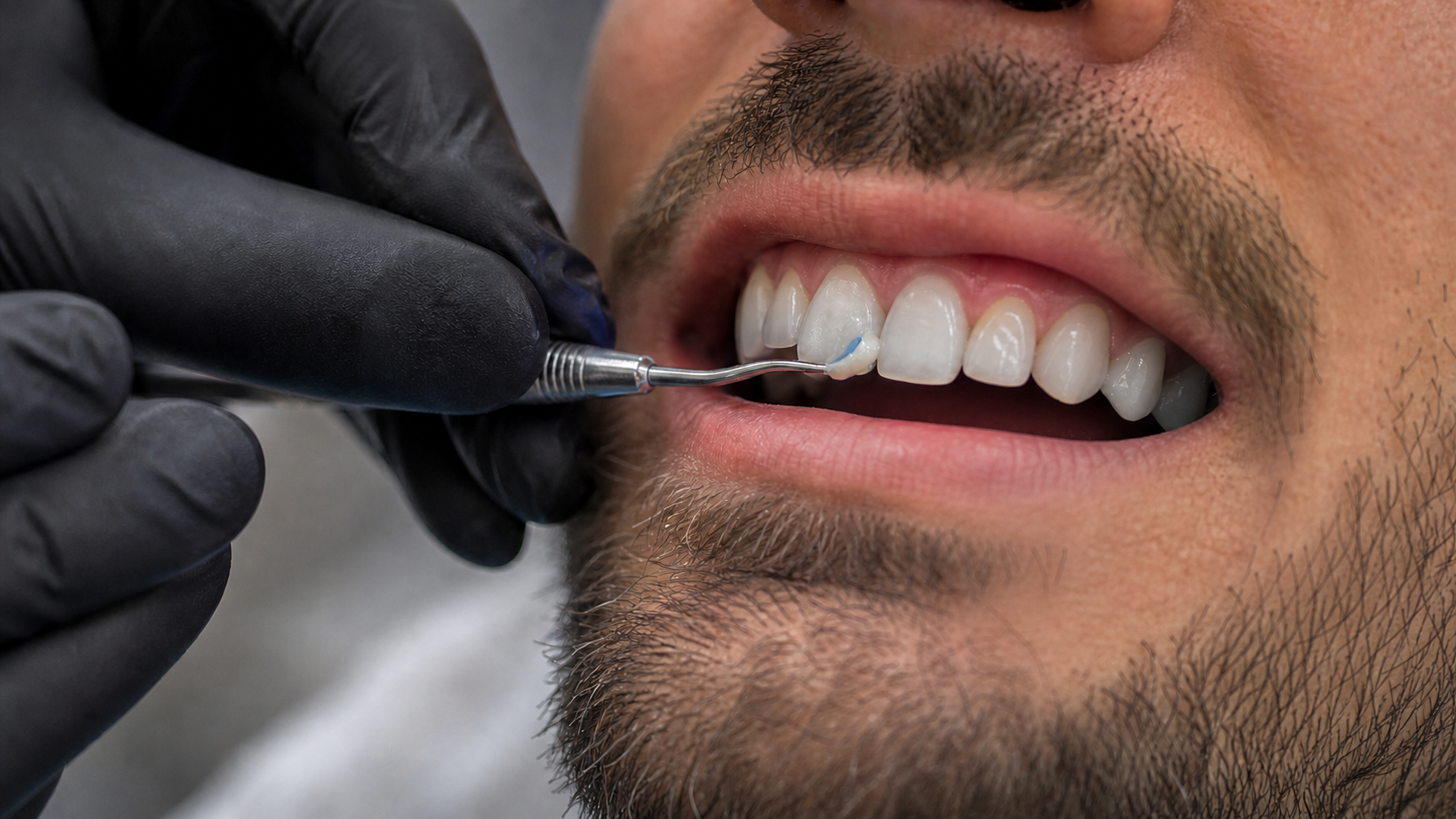
Dental bonding is a cosmetic and repair treatment in which tooth-coloured resin is applied directly to a tooth, shaped and hardened with a curing light. It is used to fix chips, cracks, small gaps and minor discolouration with little or no enamel removal. Bonding is usually completed in one visit, without a lab or a temporary.
Quick Repairs That Blend In
Dr. Yasmin Vakilian provides dental bonding in Toronto at Enamelle Dental once a clinical exam and consultation confirm it suits your tooth.
Tooth-coloured resin repairs chips, cracks, gaps and minor discolouration, with little or no enamel removal.
Treatment is usually completed in one visit, and little or no anesthesia is needed in most cases.
Bonding typically lasts several years, with touch-ups or replacement as it wears.
Pricing is usually discussed per tooth, and the cost depends on the size of the area and the complexity of the case.
When you come in for bonding on Dupont Street, we begin by matching the resin to your natural teeth with a shade guide. The aim is a repair that blends in with the teeth around it.
When Is Dental Bonding Recommended?
Bonding is best for small to moderate corrections. It is often used to:
repair chipped or cracked teeth
close small gaps
improve minor discolouration
It is not ideal for large restorations or for people who grind their teeth heavily. Suitability is confirmed through a clinical exam and consultation. The [Canadian Dental Association] also describes bonding as a way to make small cosmetic repairs with tooth-coloured resin, usually in a single visit.
Tooth Bonding Near Ossington: What Happens During Treatment?
Each step is done directly on the tooth, so there is no waiting for a lab. Your tooth bonding in Toronto involves:
choosing the shade with a shade-matching guide, so the resin blends with the surrounding teeth
applying an etching and bonding agent
placing the tooth-coloured resin and shaping it on the tooth
hardening it with a curing light
shaping and polishing for a natural look and a comfortable bite
Little or no anesthesia is needed in most cases, and numbing can be used if your tooth needs it. Appointment length varies from case to case. The iTero scanner is part of the technology available here.
Dental Bonding vs Porcelain Veneers
Bonding and veneers can both change how a tooth looks, but they suit different needs.
Dental bonding
Porcelain veneers
How it is made
Resin applied and shaped directly on the tooth
Custom shells made for your teeth
Enamel removal
Little or none
A thin layer is usually removed (CDA)
Visits
Usually one, with no lab or temporary
Usually at least two (CDA)
Changes later
Often reversible or easy to modify
Not reversible once enamel is removed (CDA)
Staining and chips
More prone to staining and chipping
Resists stains better (CDA)
For larger changes in colour or shape, our [dental veneers] page explains that option in detail.
After Your Bonding: Sensitivity and Aftercare
Mild sensitivity may occur for a short time after treatment. You receive aftercare tips, such as limiting staining foods and avoiding nail biting, to help the resin keep its colour and shape. With good care, bonding typically lasts several years, and touch-ups or replacement are done as it wears.
Dental Bonding in Toronto: Cost and Insurance
Pricing is typically discussed per tooth. The cost depends on the size of the area being treated and the complexity of the case, so a small chip differs from reshaping several teeth. Insurance may apply when bonding is restorative rather than cosmetic. Insurance claims are submitted electronically for you.
Frequently Asked Questions
How long does dental bonding last?
Bonding typically lasts several years. Over time the resin can wear, stain or chip, so touch-ups or replacement are part of normal care. Limiting staining foods and avoiding habits like nail biting help it last.
How much is dental bonding?
The cost of Toronto teeth bonding depends on how large the area is and how complex your case is, and pricing is typically discussed per tooth. Insurance may apply when bonding is restorative rather than cosmetic, so the purpose of the treatment matters too.
Can you whiten dental bonding?
No. Bonding resin cannot be whitened after placement, so if you are planning [teeth whitening], ask about the order of treatment at your consultation.
What are the downsides of dental bonding?
Bonding is more prone to staining and chipping than porcelain veneers, and it cannot be whitened once placed. It is also not ideal for large restorations or heavy teeth grinding. On the plus side, it is often reversible or easy to modify.
Is dental bonding the same as a filling?
Not exactly. Both can use tooth-coloured resin, but a filling restores a tooth after decay is removed, while bonding is mainly used to repair chips, cracks, gaps and minor discolouration. Our [tooth fillings] page covers cavity repair.
Fix a Chip or Gap on Dupont Street With Dental Bonding
At Enamelle Dental, dental bonding in Toronto is a simple way to repair small flaws while keeping your natural tooth. Dr. Yasmin Vakilian matches the shade, shapes the resin and polishes it so the repair blends in.
Usually completed in one visit, with little or no enamel removal
Shade-matched resin, shaped and polished for a natural look
Schedule a consultation to see whether bonding is right for your tooth.
Enamelle Dental, 848 Dupont Street, Toronto, ON M6G 0B9
On (October 31st, 2026), around 11:31ish AM, I was walking westbound to catch the Bus 63 (Southbound to Ossington Subway Station).<br><br>I was approached by a young lady and I want to thank her for giving me the dental goodie bag that contains the basic dental items; toothbrush, toothpaste, floss, and I wasn't expecting to find a Brookside Dark Chocolate inside,…
Great experience! I haven't been to the dentist in years and have never really had good experiences but the hygienist and dentist were super gentle and knowledgeable, made the whole experience super comfortable. I definitely will be coming back!
It was a great experience coming to enamelle dental. Dr. Vakilian was very knowledgeable and the staff were super friendly. I have sensitive teeth and everyone was very considerate when cleaning them and filling them in. Will definitely be coming back!
Dr. Vakilian and the entire team are so incredibly professional and kind. Each service I have gone in for, I have left feeling in good hands and fully aware of what was done and what I can expect post-visit. They are knowledgeable and thorough. Also huge bonus points for the clinic being so aesthetic and beautiful. Each detail has not…
One of the most beautiful dental offices I’ve ever seen. I highly recommend to anyone who lives or works in the neighbourhood. Super family friendly.<br><br>The owners have put a level of care into the design that is rare—and they take equally good care of their patients.
Leave us a review
Had a great visit? Share your experience — it means the world to our team.