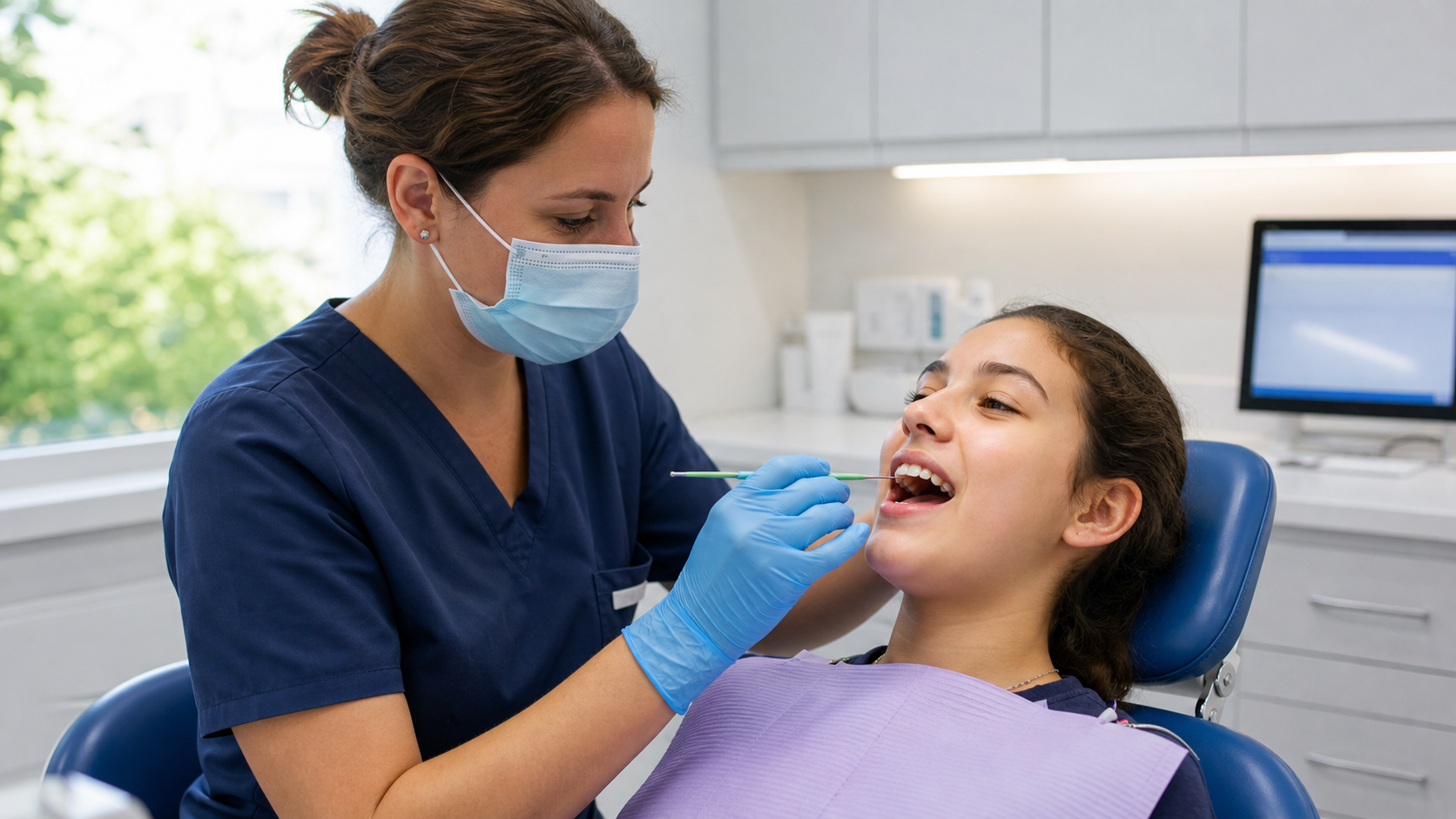
Fluoride treatment is a preventive dental treatment that strengthens tooth enamel and lowers the risk of cavities. A fluoride gel, foam or varnish is applied to the teeth during a dental visit, where it supports enamel remineralization. How often you need it depends on your cavity risk, age and oral health.
Stronger Enamel, Fewer Cavities
At Enamelle Dental, fluoride treatment in Toronto strengthens tooth enamel and helps reduce the risk of cavities.
It is applied professionally as a gel, foam or varnish, usually during routine visits, with minimal disruption to your day.
It is recommended based on an individual risk assessment, for example for children and teens at higher cavity risk, adults prone to decay, and people with braces or other orthodontic appliances.
Frequency is adjusted to your cavity risk, age and oral health, and it is reviewed during dental exams.
Patients who prefer to avoid fluoride can ask about fluoride-free options.
At your preventive visit on Dupont Street, fluoride is explained clearly before it is applied, including why it is recommended for you and how it fits your preventive care. You are always informed before application, and post-treatment instructions are provided.
What Is Fluoride Treatment?
Fluoride treatment is applied professionally during your dental visit. It works by:
strengthening tooth enamel
supporting enamel remineralization, the natural repair of early weak spots
helping reduce the risk of cavities
The [Canadian Dental Association] states that more than 50 years of research shows fluoride is safe and effective in preventing tooth decay, and encourages patients to discuss professional treatments such as fluoride varnish with their dentist.
Who Benefits From Fluoride Treatment?
Not everyone needs the same preventive plan. Fluoride treatment is commonly recommended for:
Who
Why fluoride may help
Children and teens at higher cavity risk
Extra protection for developing smiles
Adults prone to tooth decay
Strengthens enamel where cavities keep forming
Patients with enamel weakness or sensitivity
Supports enamel remineralization
Patients with orthodontic appliances
Protects enamel around brackets and wires
Every recommendation is based on your individual risk assessment, so the plan for one family member can be different from another's through our [family dentistry] care.
Fluoride Treatment on Dupont Street: What to Expect
The visit is simple and fits into your regular preventive care. Here is what happens:
fluoride is applied as a gel, foam or varnish
the application is quick and is not expected to hurt
it is usually completed during routine visits, often alongside a [teeth cleaning]
you receive post-treatment instructions
there is minimal disruption to your daily activities
How Often Should You Get Fluoride?
There is no single schedule. Frequency is adjusted based on cavity risk, tailored to your age and oral health status, and reviewed during dental exams. Fluoride may be part of your routine preventive care. The CDA recommends fluoride varnish no more than once every six months, unless a dentist recommends otherwise based on a caries risk assessment.
Prefer to Avoid Fluoride?
Some patients prefer a more holistic approach, which can include fluoride-free options for patients who prefer to avoid fluoride. The clinic discusses available options, explains their benefits and limitations, and helps patients make informed decisions. Learn more on our [holistic dentistry] page.
Fluoride Treatment in Toronto: Cost and Insurance
Fluoride is often included with preventive care or billed separately, depending on your visit. Insurance coverage is reviewed when applicable, its value is explained in terms of cavity prevention, and you are informed before application. If you have CDCP coverage, preventive care is one of the CDCP services offered here, and what is covered depends on CDCP approval and limits.
Frequently Asked Questions
How long after fluoride treatment can I eat?
Follow the post-treatment instructions you receive at your visit. They explain when you can eat, drink and brush again, with minimal disruption to the rest of your day.
Is a fluoride treatment good for your teeth?
For most people at risk of cavities, yes. Fluoride strengthens enamel, supports remineralization and helps reduce the risk of cavities, and the Canadian Dental Association describes fluoride as safe and effective in preventing tooth decay.
How often can you do fluoride treatments?
How often you have fluoride depends on your cavity risk, age and oral health, and it is reviewed during dental exams. The CDA recommends fluoride varnish no more than once every six months unless your dentist advises otherwise.
How much should a fluoride treatment cost?
It depends on how your visit is set up. Fluoride is often included with preventive care or billed separately, insurance coverage is reviewed when applicable, and you are informed before application.
Do dentists still do fluoride treatments?
Yes. Fluoride is still a standard part of preventive care for many patients, applied professionally during dental visits. At Enamelle Dental, whether you receive it depends on your own cavity risk, and fluoride-free options are discussed for patients who prefer to avoid fluoride.
Plan Your Preventive Visit Near Ossington
At Enamelle Dental, fluoride treatment in Toronto is matched to your cavity risk, not applied by habit. You hear why it is suggested and can ask about fluoride-free options if you prefer to avoid fluoride.
Fluoride applied as a gel, foam or varnish during routine visits
Frequency tailored to your age, oral health and cavity risk
Book your next preventive visit and ask whether fluoride makes sense for you.
Enamelle Dental, 848 Dupont Street, Toronto, ON M6G 0B9
On (October 31st, 2026), around 11:31ish AM, I was walking westbound to catch the Bus 63 (Southbound to Ossington Subway Station).<br><br>I was approached by a young lady and I want to thank her for giving me the dental goodie bag that contains the basic dental items; toothbrush, toothpaste, floss, and I wasn't expecting to find a Brookside Dark Chocolate inside,…
Great experience! I haven't been to the dentist in years and have never really had good experiences but the hygienist and dentist were super gentle and knowledgeable, made the whole experience super comfortable. I definitely will be coming back!
It was a great experience coming to enamelle dental. Dr. Vakilian was very knowledgeable and the staff were super friendly. I have sensitive teeth and everyone was very considerate when cleaning them and filling them in. Will definitely be coming back!
Dr. Vakilian and the entire team are so incredibly professional and kind. Each service I have gone in for, I have left feeling in good hands and fully aware of what was done and what I can expect post-visit. They are knowledgeable and thorough. Also huge bonus points for the clinic being so aesthetic and beautiful. Each detail has not…
One of the most beautiful dental offices I’ve ever seen. I highly recommend to anyone who lives or works in the neighbourhood. Super family friendly.<br><br>The owners have put a level of care into the design that is rare—and they take equally good care of their patients.
Leave us a review
Had a great visit? Share your experience — it means the world to our team.