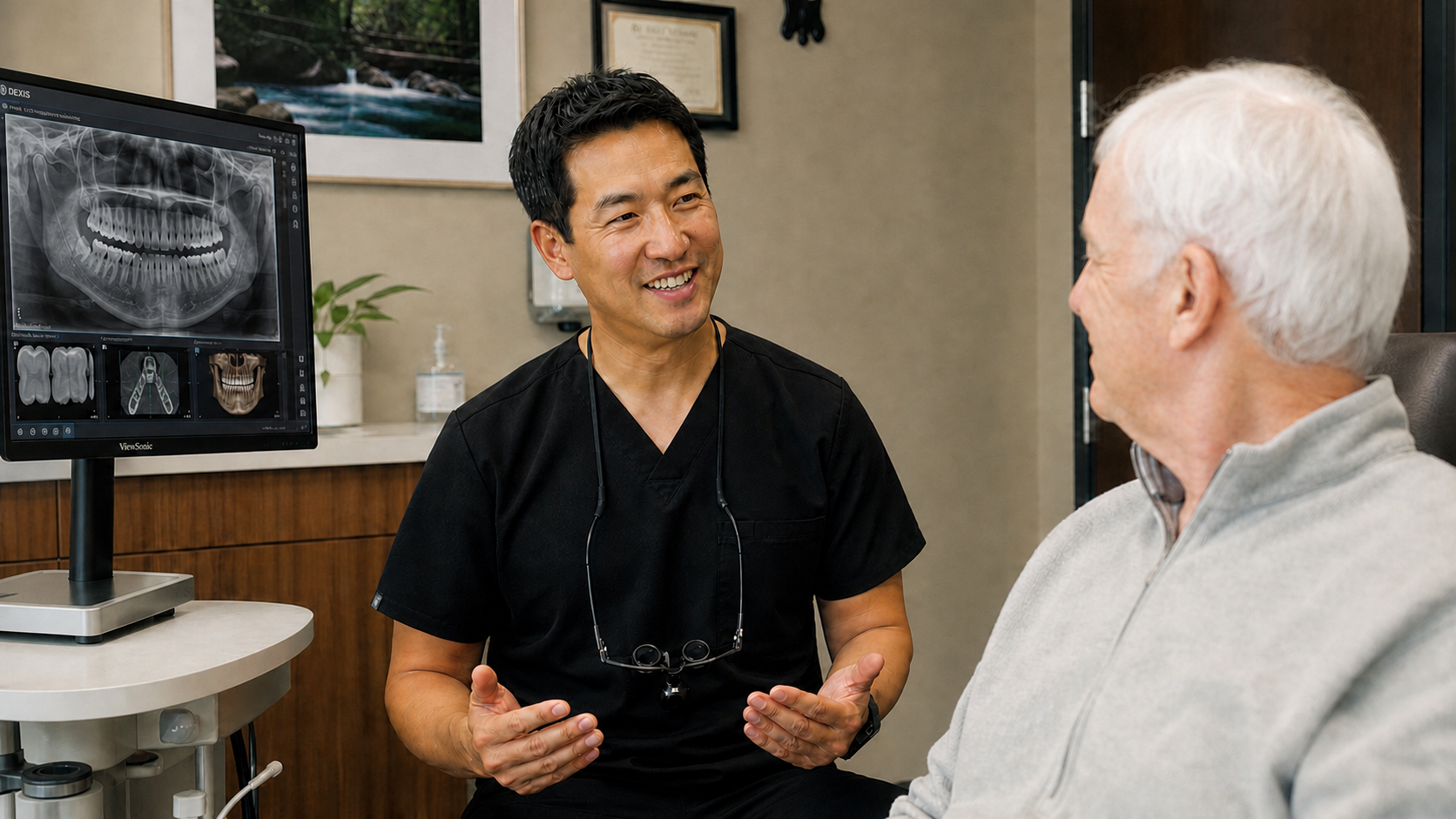
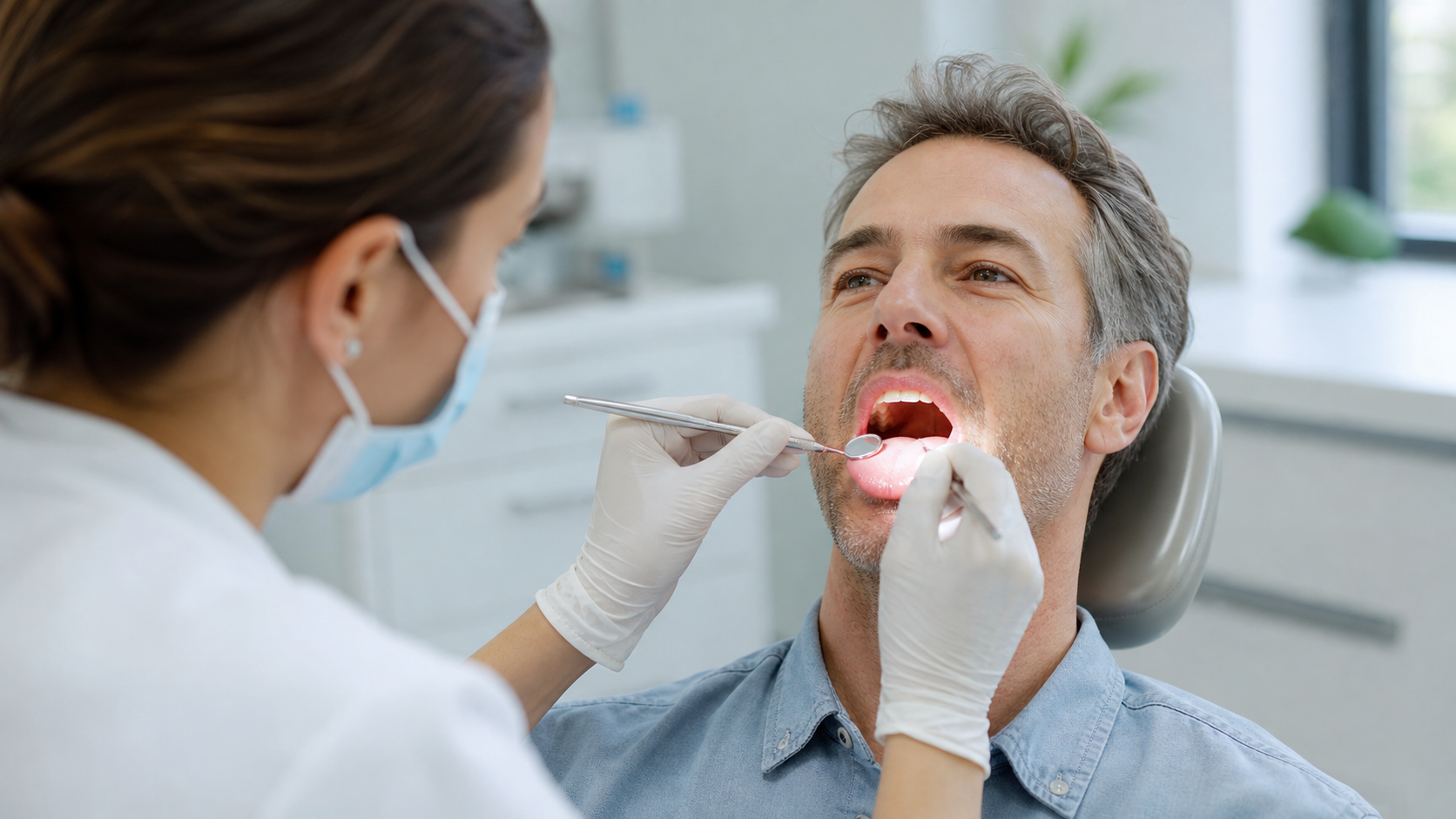
Oral cancer screening is a preventive check of the mouth, tongue, throat and neck for abnormal tissue. The dentist looks for and gently feels for sores, red or white patches, lumps and other changes, often before any symptoms appear. It is usually part of a routine dental exam, and finding changes early supports earlier diagnosis and better outcomes.
Small Changes, Found Early
Oral cancer screening in Toronto at Enamelle Dental is a preventive check designed to detect abnormal oral tissue early, often before you notice anything yourself.
Screening is often included as part of your routine exam, and if it is billed separately, that cost is explained clearly.
It is recommended for adults of all ages, with closer attention for people with higher risk factors such as tobacco or alcohol use, or a history of oral health concerns.
The check covers your mouth, tongue, throat and neck, plus your history and symptoms, with screening aids when appropriate.
If anything looks unusual, further evaluation is recommended, referrals are arranged when appropriate, and you are supported through each next step.
Here on Dupont Street, an oral cancer screening usually fits into your regular checkup, since it is often performed during routine dental exams. Before the check, tell us about any sore, patch or change you have noticed. What the dentist sees is explained clearly to you during the visit.
Why Does Oral Cancer Screening Matter?
Screening is about catching changes while they are still small. It helps identify potential concerns before symptoms appear, and an early diagnosis supports better outcomes than one made after a problem has grown.
Some people carry a higher risk than others. The CDA names tobacco use and heavy drinking as key risk factors, warns that combining smoking with alcohol is especially dangerous, and notes that people over 45 are most at risk.
Oral Cancer Screening Near Ossington: Who Should Be Screened?
Screening is part of routine care for every adult, not only for people who smoke or drink. The dentist recommends it for:
adults of all ages, as part of routine care
patients with higher risk factors, such as tobacco or alcohol use
patients with a history of oral health concerns
How often you are screened is adjusted based on your risk assessment.
How Do You Get Screened for Oral Cancer?
The simplest way to get screened is to keep up with regular checkups, because screening is often done during a [dental exam]. New patients start with a comprehensive exam with Dr. Yasmin Vakilian, any necessary X-rays and a professional cleaning with our dental hygienist, tailored to your oral health needs. Our [teeth cleaning] page explains that part of the visit.
The screening itself includes:
a visual examination of your mouth, tongue and throat
gentle palpation of the oral tissues and neck, to feel for lumps or thickened areas
a review of your health history and any symptoms you have noticed
screening aids, used when appropriate
a clear explanation of the findings
What Are 5 Signs of Oral Cancer?
Knowing the warning signs helps you act between visits. Patients are taught to watch for:
persistent sores or ulcers
lumps, thickened tissue or swelling
red or white patches in the mouth
difficulty swallowing or chewing
ongoing numbness or discomfort
The [Canadian Dental Association] also lists bleeding and sores that do not heal among the warning signs. If one of these changes lasts, mention it to us instead of waiting for your next routine visit.
Screening vs Further Evaluation: What Is the Difference?
A screening looks for anything unusual. It does not diagnose cancer on its own.
Oral cancer screening
Further evaluation
Purpose
A routine check for abnormal tissue
A closer look at one specific area of concern
When it happens
Often during routine dental exams
When abnormalities are found
What it involves
Visual exam, gentle palpation, history review, screening aids when appropriate
Tests chosen for that area, which can include a biopsy or imaging
What you get
Findings explained clearly
Referrals arranged when appropriate and support through next steps
What Happens If Something Unusual Is Found?
An unusual area is not the same as a cancer diagnosis. A screening only shows where a closer look is needed, and the next step is to find out more.
Further evaluation is recommended if abnormalities are found.
Referrals are arranged when appropriate.
You are supported through each next step, with every finding explained clearly.
Oral Cancer Screening in Toronto for CDCP Patients
Patients with Canadian Dental Care Plan coverage are welcome here, and comprehensive dental exams are among the services provided to [CDCP patients]. What your plan pays for depends on CDCP approval and limits, so you may have a co-payment or a non-covered portion. We explain what is covered and give advance notice of any co-payment.
Frequently Asked Questions
Do dentists do oral cancer screenings?
Yes. Dentists check for signs of oral cancer during regular dental exams, and the Canadian Dental Association notes that dentists are trained to detect early signs of the disease. At Enamelle Dental, screening is often performed during routine exams for adults of all ages.
How much does an oral cancer screening cost?
It depends on how your visit is billed. Oral cancer screening is often included as part of a routine exam, and if it is billed separately, the cost is explained clearly before treatment begins. For CDCP patients, coverage depends on CDCP approval and limits.
How long can oral cancer go undetected?
There is no set time frame. Concerns can be present before symptoms appear, which is why screening during routine exams matters. A sore, patch or lump that does not go away should be checked rather than left until your next appointment.
What tests are done to check for oral cancer?
At a dental visit, screening is a visual and hands-on check of the mouth, throat and neck, with screening aids when appropriate. If an area needs a closer look, the Canadian Dental Association explains that a biopsy of the suspicious area may be taken and examined under a microscope, and imaging such as X-rays, ultrasound, a CT scan or an MRI may follow.
What are the common causes of oral cancer?
The exact cause of oral cancer is not known, but certain risk factors raise the chance of developing it. Risk factors include tobacco and heavy alcohol use, especially combined; age over 45, sun exposure to the lips and a history of white patches called leukoplakia also play a role. Patients with higher risk factors may be screened more closely.
Add an Oral Cancer Screening to Your Next Checkup on Dupont Street
At Enamelle Dental, your oral cancer screening in Toronto includes a gentle check, with findings explained in plain words.
A check of your mouth, tongue, throat and neck, with screening frequency adjusted to your risk factors
Referrals arranged when appropriate, and support through every next step if something is found
Reserve your next visit, and let us know about any changes you have spotted since your last one.
Enamelle Dental, 848 Dupont Street, Toronto, ON M6G 0B9
On (October 31st, 2026), around 11:31ish AM, I was walking westbound to catch the Bus 63 (Southbound to Ossington Subway Station).<br><br>I was approached by a young lady and I want to thank her for giving me the dental goodie bag that contains the basic dental items; toothbrush, toothpaste, floss, and I wasn't expecting to find a Brookside Dark Chocolate inside,…
Great experience! I haven't been to the dentist in years and have never really had good experiences but the hygienist and dentist were super gentle and knowledgeable, made the whole experience super comfortable. I definitely will be coming back!
It was a great experience coming to enamelle dental. Dr. Vakilian was very knowledgeable and the staff were super friendly. I have sensitive teeth and everyone was very considerate when cleaning them and filling them in. Will definitely be coming back!
Dr. Vakilian and the entire team are so incredibly professional and kind. Each service I have gone in for, I have left feeling in good hands and fully aware of what was done and what I can expect post-visit. They are knowledgeable and thorough. Also huge bonus points for the clinic being so aesthetic and beautiful. Each detail has not…
One of the most beautiful dental offices I’ve ever seen. I highly recommend to anyone who lives or works in the neighbourhood. Super family friendly.<br><br>The owners have put a level of care into the design that is rare—and they take equally good care of their patients.
Leave us a review
Had a great visit? Share your experience — it means the world to our team.